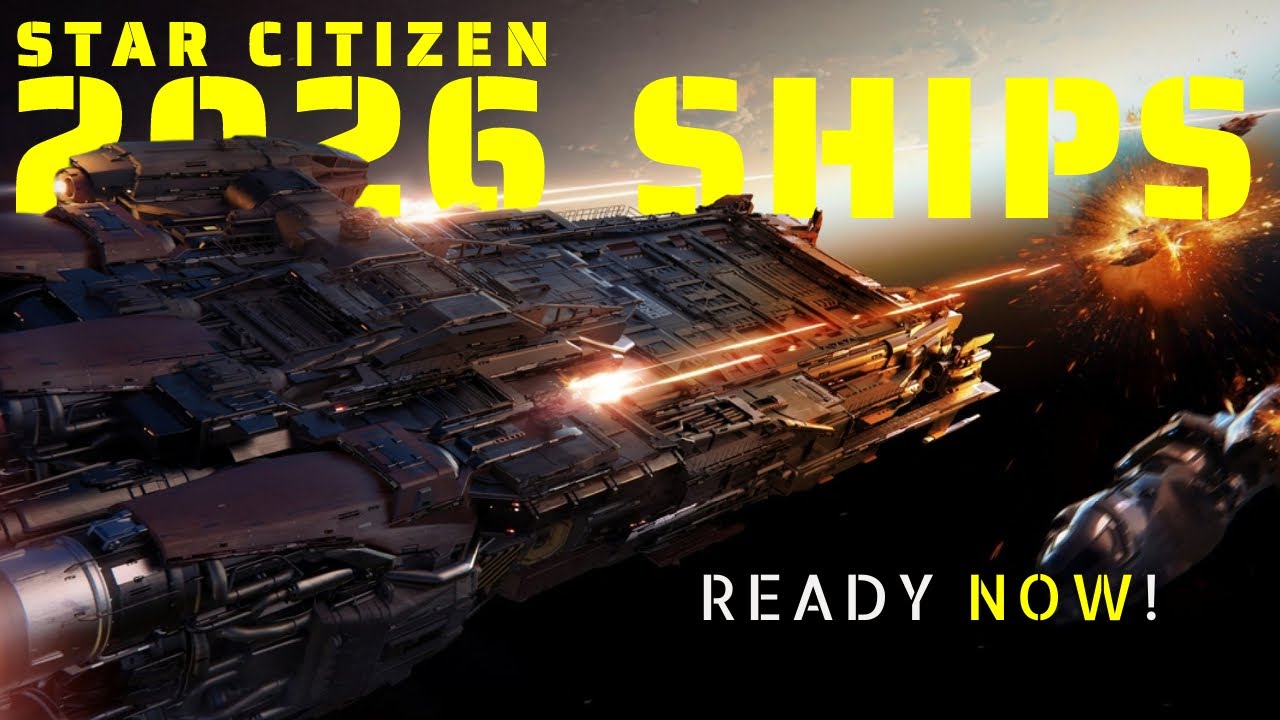
In 2025, Star Citizen’s developer Cloud Imperium shifted its development strategy by releasing ten new ships into the persistent universe without unveiling any new concept ships, marking the first time they focused on clearing the backlog rather than expanding it. This change significantly impacts the game’s economic model, as players have traditionally funded ships that could take years to reach their hangars. The key difference now lies in prioritizing ships that utilize existing gameplay systems, avoiding prolonged development delays caused by pending feature implementations, a problem that plagued previous ships like the Merchantmen.
Several ships slated for 2026 exemplify this new approach. The RSI Galaxy, coming four years after its announcement, will launch with three modules—cargo, medical, and refinery—introducing the game’s first ship-based refinery. This innovation promises exponential efficiency gains by allowing players to process materials on the go, although questions remain about whether refining can occur offline. Meanwhile, the Drake Ironclad has been redesigned as a piracy-focused vessel with a detachable command module for boarding operations, enhanced cargo capacity, and a repair bay, making it the most effective piracy ship disguised as a cargo hauler.
The Hull B is another highly anticipated release, designed to land while fully loaded, eliminating the need for vulnerable orbital cargo transfers. Its cargo capacity and built-in tractor beams make it a practical workhorse rather than a luxury vessel. The Gatak Railin, a vertically aligned cargo hauler with doubled cargo capacity, remains in development with unresolved design challenges, making its release uncertain for 2026. Conversely, the Outland Forge, a small to medium ship combining crafting, refining, and ground extraction capabilities, aims to solve the current inefficiency of requiring multiple ships and players for resource processing, though it likely won’t arrive until late 2026 or 2027 due to the need for several gameplay systems to be fully functional.
The Anvil Legionnaire and Drake Kraken represent ships still hindered by dependencies on new gameplay mechanics. The Legionnaire awaits the completion of hacking gameplay and practical boarding mechanics, while the Kraken, a capital-class aircraft carrier-like vessel, remains in white box phase and won’t arrive before 2027. The Kraken’s commercial variant, the Privateer, is even further off due to required persistent shop mechanics. Overall, 2026’s confirmed ships focus on leveraging existing gameplay systems to ensure timely releases, marking a significant shift in Star Citizen’s development philosophy and advising players to prioritize funding ships closer to completion rather than concept promises.
In summary, Cloud Imperium’s 2026 roadmap emphasizes delivering ships that integrate with current gameplay features, reducing wait times and improving player experience. The year promises practical and innovative vessels like the Galaxy, Ironclad, and Hull B, while more ambitious ships dependent on new mechanics remain in longer-term development. This strategic pivot signals a closing gap between concept and playable ships, encouraging players to rethink their purchasing decisions and focus on ships that will realistically arrive in the near term.