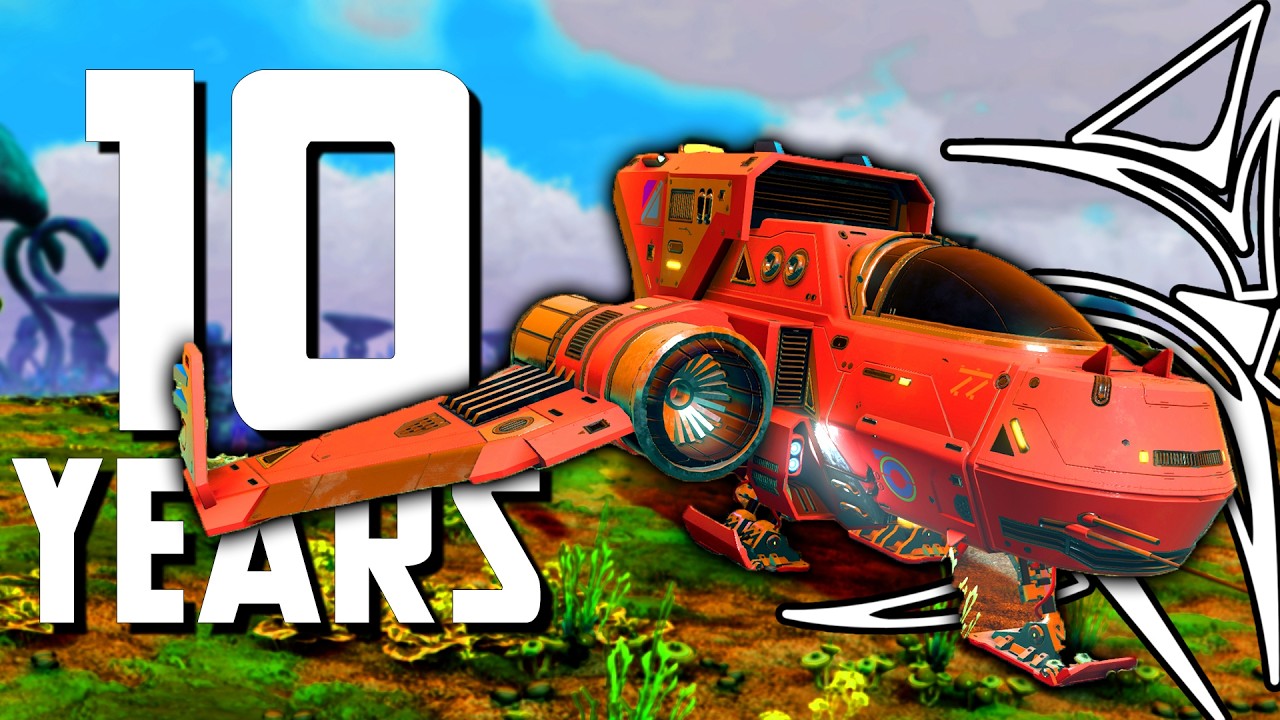
The video transcript provides a comprehensive retrospective on the ten-year journey of No Man’s Sky, highlighting its evolution from a highly criticized launch to a celebrated, continually expanding universe. Initially, the game was envisioned as a boundaryless space exploration experience using procedural generation, aiming to capture the true essence of exploration. However, the launch was disastrous, plagued by bugs, missing features, and overhyped promises, leading to overwhelmingly negative reviews and player backlash. Despite this, Hello Games persevered, gradually rebuilding trust through significant updates like Foundation, which introduced base building, and Pathfinder, which added vehicles, even though some features, such as vehicles, were ultimately underused due to gameplay mechanics like the punch-glide trick.
The development team embraced community engagement and innovative approaches, exemplified by the Waking Titan alternate reality game that connected players and deepened the game’s lore. Major updates like Atlas Rises introduced a more substantial story and rudimentary multiplayer features, marking the beginning of the game’s redemption arc. Over time, Hello Games expanded the universe with numerous updates, including Beyond, which added VR support and enhanced multiplayer, and Origins, which vastly increased planetary variety and introduced iconic creatures like giant sandworms. These updates reflected a shift towards more regular content releases, often inspired by player feedback and creative experimentation within the team.
Despite technical and design challenges, such as the cumbersome outpost building system and imperfect physics engine, Hello Games consistently pushed the boundaries of procedural generation and game engine capabilities. The introduction of features like ship customization and base building on freighters showcased the team’s technical ingenuity and creative flexibility. However, the developers often avoided addressing the game’s early failures directly, opting instead to focus on positive progress and new content. This avoidance drew criticism for what some perceived as toxic positivity, yet the ongoing updates and community events demonstrated a commitment to evolving the game into a rich, player-driven experience.
The transcript also discusses the game’s unique position within the space exploration genre, noting its pioneering efforts despite competition and similarities with other titles like Kerbal Space Program, Elite Dangerous, and Starfield. Hello Games’ indie status allowed for rapid development cycles and creative freedom, contrasting with larger studios’ bureaucratic processes. Features like community expeditions, new game modes, and social hubs fostered a strong player community and encouraged replayability. The developers’ willingness to experiment with diverse gameplay elements, from fishing to turn-based pet battles, contributed to the game’s enduring appeal and constant reinvention.
In conclusion, No Man’s Sky’s decade-long journey is a testament to resilience, innovation, and community engagement. While the game’s rocky start remains a significant part of its history, the continued expansions and improvements have transformed it into a beloved title with a dedicated fanbase. The developer commentary expedition offers players insight into the game’s development, challenges, and successes, celebrating both the technical achievements and creative milestones. Despite some frustrations with certain features and the developers’ reluctance to fully confront past controversies, No Man’s Sky stands as a remarkable example of how a game can grow and evolve over time through dedication and player collaboration.