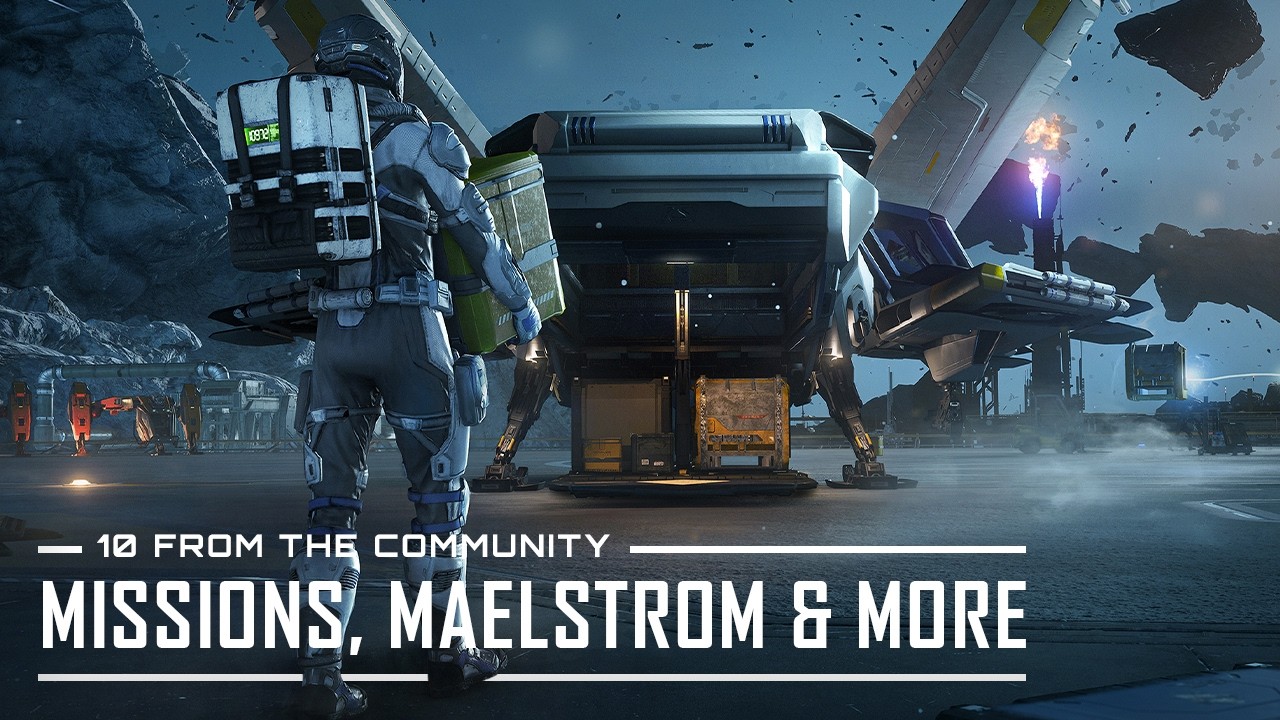
In the first episode of “10 From the Community,” the developers Rich Tyra, Ian, and Carl address ten questions submitted by the community regarding various gameplay systems and upcoming features. They begin by discussing the new flight model, which is fully implemented in Squadron 42 and emphasizes player control over power distribution without fixed modes. This model includes features like quantum boost and travel, allowing fluid navigation in space and atmosphere. The team is currently working on adapting this flight model for Star Citizen, ensuring it functions smoothly across multiplayer, PvP, and PvE environments while maintaining depth and intuitiveness for different player careers.
Next, the conversation shifts to Mission 2.0, a significant overhaul aimed at enabling designers to create more meaningful, scalable, and robust mission content. Key improvements include persistence across logins, better mission sharing and reward distribution, and a more declarative mission design approach that reduces bugs and complexity. This system will also enhance the player experience by improving mission presentation, filtering, and acceptance processes. The goal is to allow players to enjoy more dynamic and cooperative gameplay without penalizing teamwork, while designers can focus on creativity rather than technical edge cases.
The team then addresses the engineering gameplay system, acknowledging that it is still a work in progress and not yet balanced to their satisfaction. They emphasize that engineering is intended to extend ship life and create engaging gameplay opportunities, especially with the upcoming new flight model. Future improvements include refining AI ship “soft death” mechanics and enhancing mission-related features such as cargo manifests and MFD screen readability. The developers recognize the need for faster development iterations and better integration between engineering and mission systems to improve overall gameplay quality.
Other topics covered include AI blades, which remain a planned feature for the 1.0 release, and storage solutions for armor and ships. The developers are working on FPS Armor 2.0, Starware customization, and suit lockers to allow players to quickly switch loadouts and personalize their characters and ships. They also discuss the Maelstrom damage system, which is complete in Squadron 42 and provides granular, physics-based damage feedback but still needs to be integrated into Star Citizen. Additionally, the medical respawn system is set to offer multiple respawn options, including bases, ships, and hospitals, enhancing player choice after death.
Finally, the developers address community concerns about mission bugs and content stability, attributing issues to the complexity and scale of the game combined with limited automated testing. They are implementing better validation tools and refactoring systems to improve robustness. Other improvements include adding storage terminals in instanced missions like Siege of Orison to reduce loot frustration and plans to allow players to log out and back in at their current location, especially when in parties or ships. Overall, the team expresses commitment to ongoing improvements, faster iterations, and enhancing player experience across all gameplay aspects.