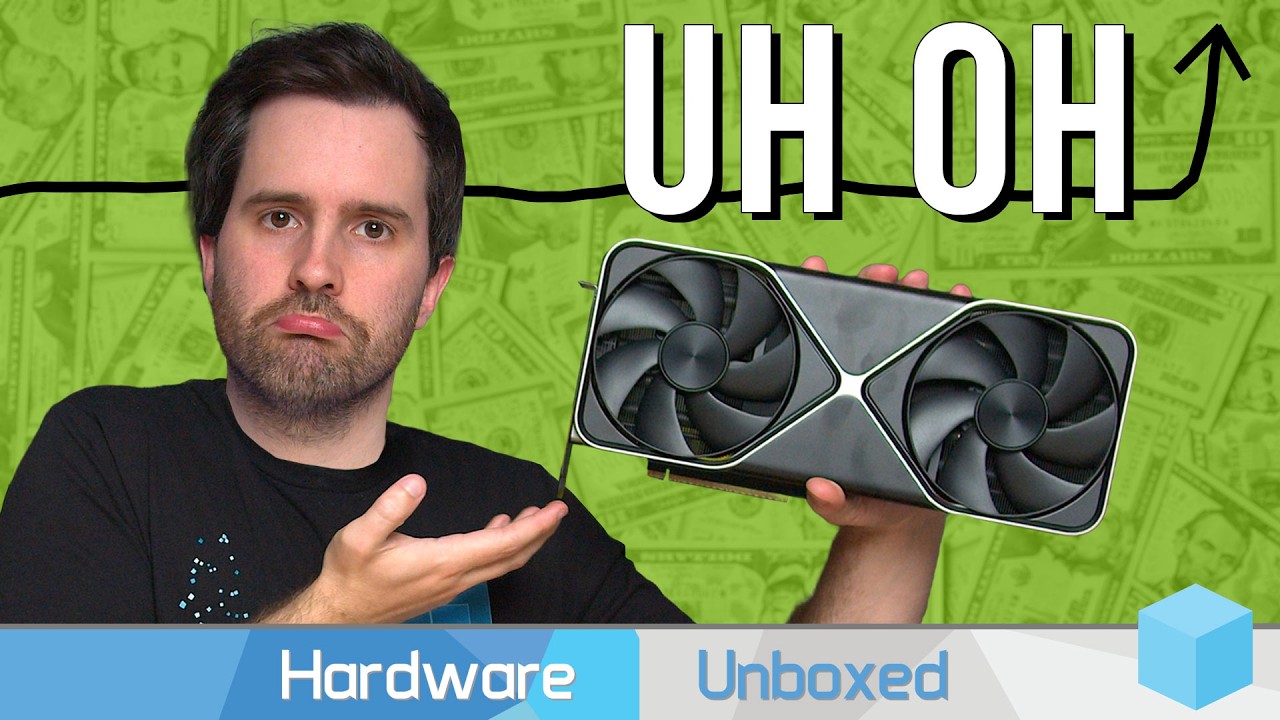
GPU prices have seen a sharp and troubling increase over the past month, reversing a slight downward trend observed earlier in 2026. This price surge affects multiple regions globally, with data collected from 10 countries revealing that the average GPU price has risen by about 15% compared to the previous month. The increases are especially pronounced in Nvidia’s GeForce lineup, which has experienced a 19% month-on-month price hike, whereas AMD’s Radeon GPUs have seen a smaller 11% rise. These hikes are not uniform across models, with some entry-level and mid-range cards seeing particularly steep increases, driven largely by rising memory costs.
Entry-level Nvidia cards like the RTX 5050 and RTX 5060 have become significantly more expensive, with the RTX 5060 in the US jumping from an expected $300 MSRP to around $450. The 16 GB variant of the RTX 5060 Ti has seen even more dramatic price inflation, now sitting roughly 70% above MSRP in the US and over 50% globally, largely due to increased GDDR7 memory prices. Higher-end models such as the RTX 5070 and 5070 Ti have also risen substantially, with the RTX 5090 reaching nearly $5,000 and priced over 140% above MSRP, reflecting its positioning as a workstation card rather than a typical gaming GPU.
AMD Radeon cards have been somewhat more resilient to these price hikes, although they are not immune. The RX 960 XT 8 GB model experienced the largest increase among Radeon GPUs, with prices up 16% month-on-month and now 26% above MSRP on average. The 16 GB version of this model is the most overpriced Radeon card relative to MSRP, sitting 28% above normal market price. Other Radeon cards like the RX 970 and 9070 XT have seen smaller increases, maintaining better value compared to Nvidia’s offerings, especially given performance differences.
Intel’s Arc GPUs, specifically the B570 and B580 models, are also seeing price increases and dwindling availability, though they remain some of the cheapest options on the market. The B570 is particularly hard to find and has increased in price by around 12% since July. Despite these rises, Intel’s cards still offer competitive pricing in the lower GPU market segment, especially when compared to AMD and Nvidia counterparts.
Overall, the GPU market is facing significant inflation largely driven by rising memory costs, especially for Nvidia’s GDDR7-equipped cards. Prices are now averaging 28% above launch MSRP, with some models up by 40-50%, making it challenging for gamers to find good value. Radeon cards currently offer better pricing relative to performance, though this may change if AMD follows Nvidia with further price hikes. The situation is volatile, and prices are unlikely to return to earlier 2026 levels soon, prompting continued monitoring of the market in coming months.
Useful Links