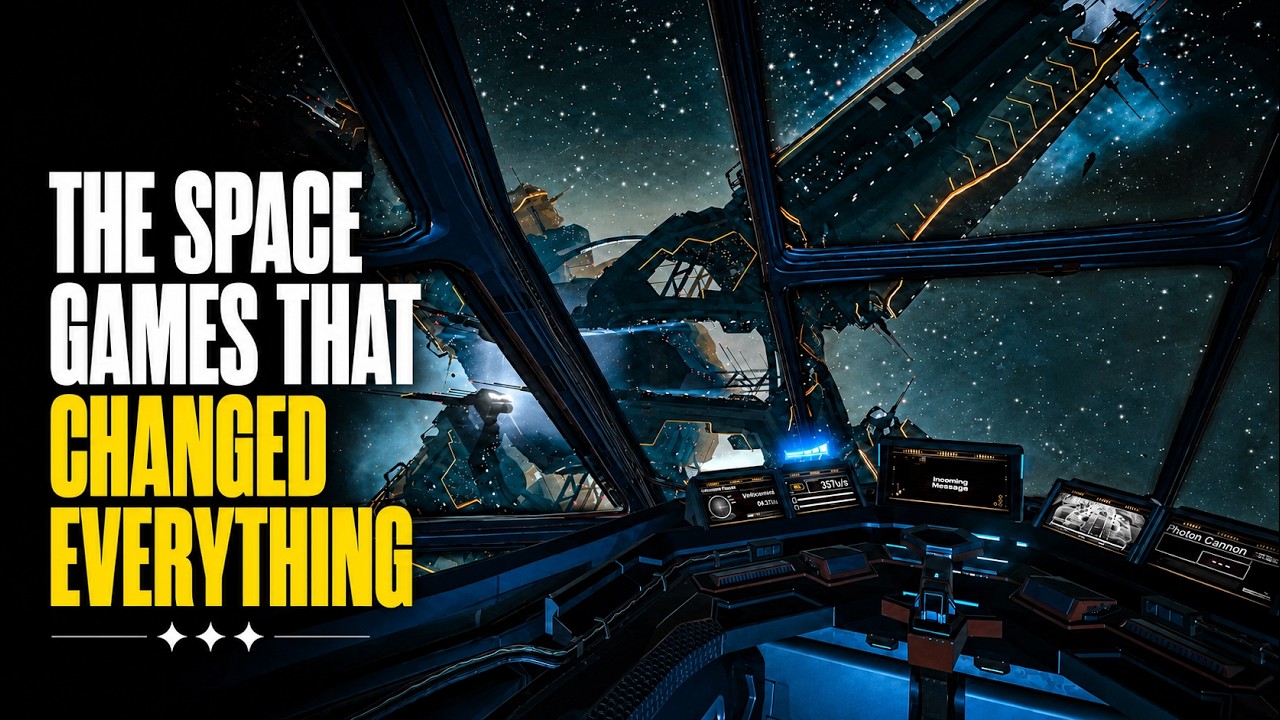
The space game genre has evolved dramatically over the past decade, with advancements such as more ships, better planets, and expansive galaxies. However, not all games excel at every aspect. The video highlights the “10-year club,” a group of space games that have significantly shaped the genre over time. Many of these influential titles are at least a decade old, with one new member joining the club recently. These games transformed space gaming by introducing new mechanics, immersive worlds, and innovative gameplay that set new standards for the genre.
The journey begins with early space games like Elite in 1984, which pioneered first-person 3D space simulation with vast galaxies and dynamic economies. Elite shifted the focus from simple high-score pursuits to exploration, trading, and upgrading ships, laying the foundation for future space sims. The evolution continued with Frontier Elite 2, expanding on these ideas. The 1990s saw cinematic space experiences like Wing Commander and Freelancer, which further enriched the genre with narrative-driven gameplay. Meanwhile, the X series introduced a living economy where NPCs actively transported goods, creating a dynamic and reactive universe.
Eve Online, launched in 2003, revolutionized space games by placing the universe entirely in the hands of players. Its player-driven economy, territorial control, and permanent consequences for ship loss created a persistent, evolving history shaped by the community. This multiplayer dynamic introduced real stakes and emergent storytelling, setting Eve apart from previous single-player experiences. However, after this period, the genre experienced a decline, with few new space games being developed due to their large scope and financial risk.
The resurgence began in 2012 with Chris Roberts’ crowdfunded Star Citizen and Squadron 42, which raised over a billion dollars but remain unfinished after more than a decade. Despite delays, this funding demonstrated a substantial demand for expansive space games. Around the same time, Elite Dangerous revived the Elite legacy through successful crowdfunding, combining a realistic, massive 1:1 scale galaxy with multiplayer elements and a dynamic economy. These projects disproved the notion that space games lacked an audience, proving the genre’s enduring appeal.
The newest addition to the 10-year club is No Man’s Sky, which celebrated its tenth anniversary recently. Despite a rocky launch, Hello Games transformed it through around 40 major free updates, adding diverse gameplay elements such as base building, VR, underwater exploration, and even turn-based creature battles. Unlike other titles that evolved into better versions of themselves, No Man’s Sky continuously reinvented its universe, showing that space games need not settle on a single identity. This adaptability has not only influenced the space genre but also holds potential to impact gaming more broadly.