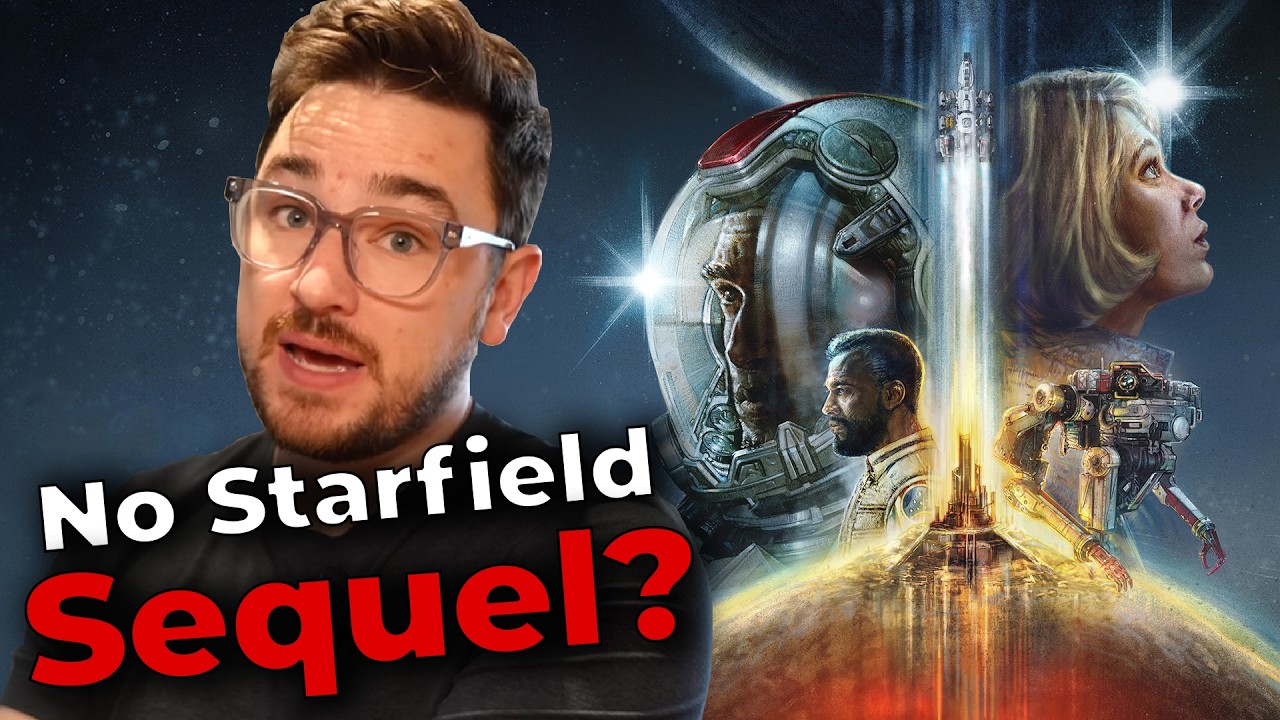
The video discusses recent insights from Curt Coleman, a former lead system designer at Bethesda Game Studios (BGS), regarding the future of Starfield and the studio’s internal challenges. Coleman, known as a lore master and veteran of Bethesda, expressed skepticism about a Starfield sequel, stating that the original game was not successful enough to warrant one. Despite Todd Howard’s public optimism about Starfield’s success, Coleman believes the game did not fully realize Howard’s original vision. He suggests that a sequel could have better achieved this, especially if it had incorporated more procedural generation and Bethesda’s narrative strengths, similar to what games like No Man’s Sky have accomplished over time.
Coleman highlighted several issues that hampered Starfield’s development, including the limitations of the Creation Engine, which was not well-suited for the ambitious scope of the game. He noted that many new mechanics introduced in Starfield caused delays because designers had to wait for systems to be built before creating content. Additionally, features like outpost building were underutilized and poorly integrated into the main storyline, representing missed opportunities. He also pointed out that the development team, although large, was still insufficient to meet the grand vision for the game, indicating that Bethesda needed even more resources to deliver on its ambitions.
The interview also shed light on the organizational and communication challenges within Bethesda as it grew. Coleman described how Bethesda’s expansion to multiple studios and the involvement of Microsoft led to bureaucratic layers that slowed decision-making and created confusion among teams. He reminisced about the earlier, more intimate days of Bethesda when decisions were made quickly and directly with Todd Howard. Over time, as the company scaled, senior developers transitioned from hands-on roles to more managerial positions, which Coleman found less fulfilling. This shift contributed to his eventual departure from the studio.
A significant part of the discussion centered on Coleman’s personal experience with Bethesda’s leadership decisions. He revealed that Todd Howard had promised him the lead design role on The Elder Scrolls 6 after Skyrim, but this promise was not fulfilled. Instead, Bethesda chose a different leadership path for the project, which was a difficult and disappointing moment for Coleman. This change coincided with a period when several senior developers left Bethesda, reflecting broader shifts in the studio’s culture and direction following its acquisition by Microsoft and the changing priorities in project development.
Finally, the video speculates on the future of Bethesda’s major franchises. While Starfield’s sequel seems unlikely, attention remains on The Elder Scrolls 6, which is still years away from release. The speaker predicts a possible reveal or teaser in the summer but doubts the game will be ready for a full gameplay showcase anytime soon. The video concludes by noting the challenges Bethesda faces in balancing ambitious game design with practical development realities, especially under the pressures of corporate growth and new ownership.