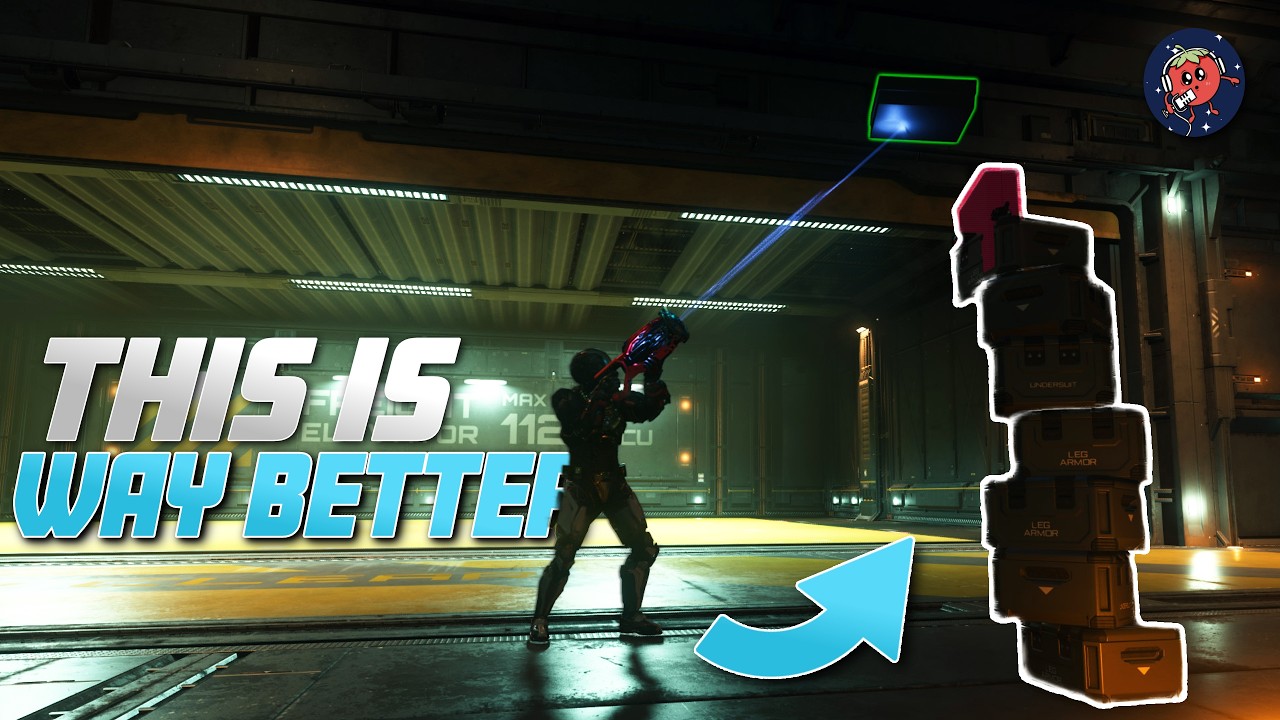
The recent Star Citizen tech preview showcased promising improvements in the game’s physics system, particularly how rigid physical entities like cargo boxes and grenades interact and synchronize over the network. During the preview, the user demonstrated how dragging a box from under a stack caused the other boxes to fall realistically, a significant improvement over past physics glitches. The update aims to reduce issues like snapping, mid-air teleporting, and rubber banding, which have long plagued thrown or dropped objects in the game. However, this initial test only covers free physical items, with ships, characters, and attached items remaining unaffected for now.
One notable fix addressed a collision glitch where contact normals were miscalculated, causing objects to wobble or bounce unpredictably. This correction helps objects behave more naturally when stacked or dropped, avoiding bizarre physics reactions that have frustrated players. The presenter highlighted how, during testing, the boxes responded to gravity and collisions in a more believable manner, rarely jittering or glitching. This is a significant step forward, as stacks of boxes in Star Citizen have historically been unstable and prone to causing game-breaking physics errors.
The preview also encouraged players to experiment by picking up, throwing, and stacking objects to test the new physics behavior. The feedback loop with developers was emphasized, with suggestions like playing “tractor beam Jenga” to see how high cargo boxes could be stacked before instability occurs. Developer responses indicated that while ships and vehicles are not yet included in these physics improvements, they are planned for future updates, with careful attention to preserving flight behavior. The community’s input during this testing phase is crucial for refining the system before a full live release.
Despite the progress, the presenter cautioned that this is still an early tech preview running on less heavily loaded servers, so performance in live gameplay might differ. Nonetheless, the improvements represent a fundamental fix to a long-standing problem in Star Citizen’s physics engine. The ability to stack and move cargo boxes more reliably opens up new possibilities for in-game logistics, base building, and immersion. The hope is that future updates will allow players to define cargo grids anywhere, facilitating better organization and smoother interactions with physical objects.
In conclusion, the tech preview marks a meaningful advancement in Star Citizen’s physics, addressing key issues that have impacted gameplay for years. While not all physics-related problems are solved yet, the demonstrated improvements are encouraging and show that the developers are actively working on making the game’s physical interactions more realistic and stable. This progress has been well received by the community, and further testing and feedback will help ensure these changes make it into the live game, enhancing the overall player experience.