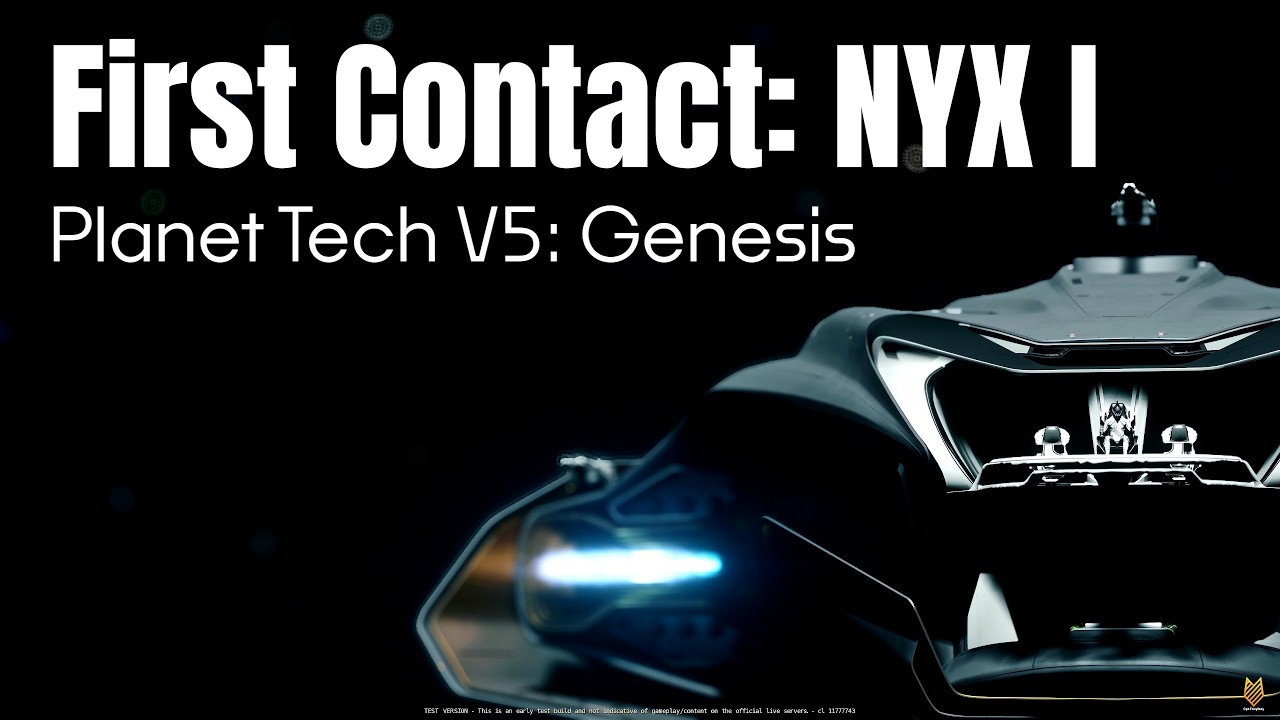
The video, dated October 2nd, 2026, announces the beginning of a new tech preview for Planet Tech Version 5, codenamed Genesis, focusing on the first planet, NYX I. This preview is exclusive to Evocati members under NDA and aims to test the new planetary generation and rendering system. The creator plans to stream a non-audio, non-video Twitch session to interact with viewers and gather feedback during the testing phase. The primary goal is to evaluate the new terrain, biome, and scattering technologies on NYX I, with Vulkan as the required graphics API since DirectX 11 is unsupported in this build.
Genesis represents a significant overhaul in how planets are constructed, streamed, and shaded, emphasizing physically based object placement that mimics real-world geological patterns. The video references past presentations from CitizenCon two years prior, which detailed Genesis’s features such as dynamic biomes, weather systems, lighting, and sound effects. Although this preview only includes NYX I, it is expected to showcase various biomes, geological types, and even small fauna like crabs, highlighting the ambitious scope of this planetary tech.
A key technical advancement discussed is GPU scattering, where trees, rocks, and other assets are placed using GPU processing for efficiency, complemented by CPU logic to handle physics interactions. Terrain shading is now layered, incorporating materials like soil, bedrock, and debris blended using physically based rendering (PBR) techniques to enhance visual fidelity. This layered approach aims to improve the visual transition between distant and close-up views, maintaining detail and realism at various draw distances.
The testing objectives focus on two main areas: server-side stress testing and client-side performance and visual fidelity. Server stress testing involves monitoring how the system manages tile activation and deactivation as players move across the planet, encouraging testers to spread out and vary their altitude. On the client side, testers are asked to report on vegetation density, pop-in issues, physics collisions, and overall performance, especially during fast, low-altitude flights which put the most strain on streaming and rendering.
Finally, the video clarifies that the NYX I planet in this preview is empty, lacking locations, missions, NPCs, or gameplay content, as the focus is purely on the new planet tech. Players are advised to start with a clean user configuration and use Vulkan to avoid known DirectX issues. Despite ongoing work to optimize VRAM usage and performance, the test is considered crucial for gathering valuable data. The creator expresses excitement about the preview and invites viewers to join the Twitch chat for a collaborative testing experience, marking the “first contact” with Genesis technology.