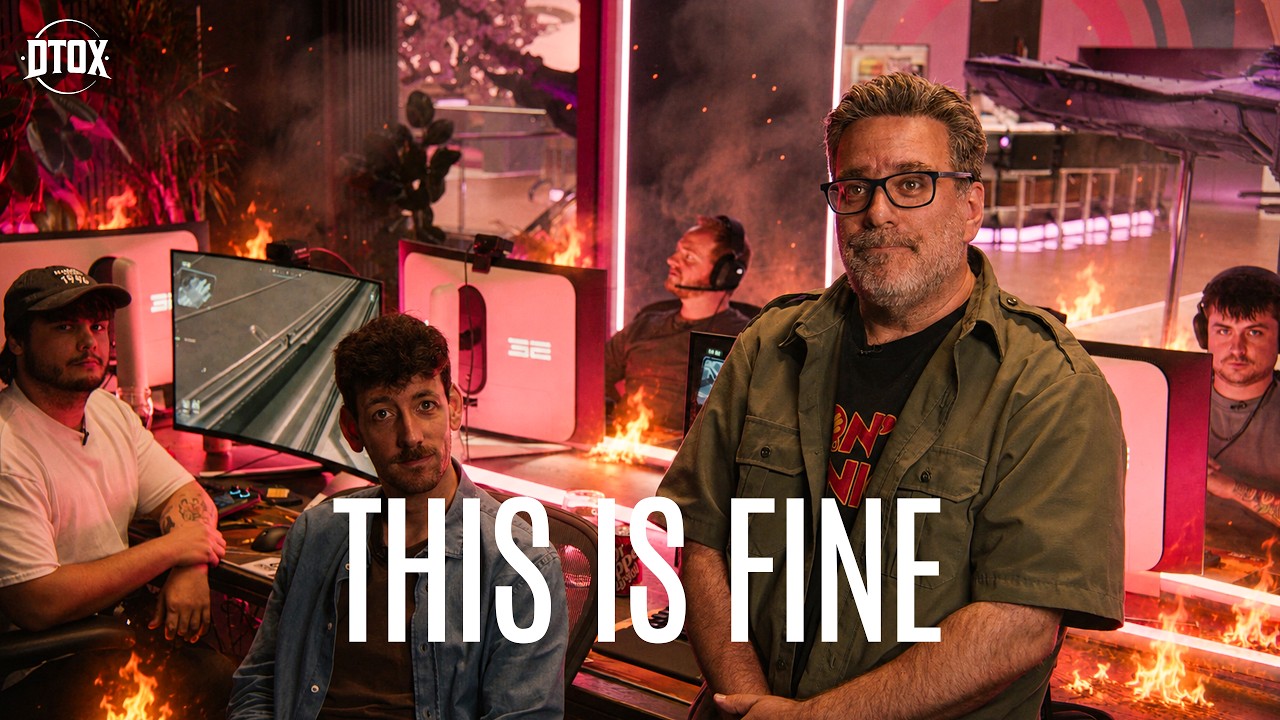
The video discusses the current troubled state of Star Citizen, focusing on recent gameplay experiences and developer live streams that have exposed ongoing technical and performance issues. The host expresses disappointment with the Siege of Orison mission, highlighting persistent problems such as animation desync, AI inconsistencies, weapon malfunctions, and interaction delays that plague both public servers and private developer environments. These issues undermine the reliability and immersion of the game, casting doubt on the developer’s ability to deliver a consistent PvE experience despite the introduction of instancing intended to improve performance and control.
The host emphasizes that the fundamental gameplay mechanics—such as weapon switching, NPC reactions, mission updates, and ship spawning—remain unreliable, which detracts from the overall experience regardless of the increasing amount of content being added to the game. While Cloud Imperium Games (CIG) has expanded the game’s scope with more missions, locations, and player counts, the underlying technical foundation struggles to support these additions. This results in gameplay that often feels broken or frustrating, rather than engaging and polished, which is a significant concern given the game’s ongoing development and live operation.
A key challenge highlighted is the tension between developing Star Citizen as a complex, ambitious alpha project and maintaining a playable, stable experience for the current player base. CIG is effectively managing two versions of the game simultaneously: one pushing forward with new features and systems toward a future 1.0 release, and another that must remain functional enough to keep players engaged and financially supporting the project. This dual demand creates a situation where new content frequently overwhelms the game’s fragile infrastructure, leading to a cycle of patching and adding more content without fully resolving core issues.
The video also critiques the conduct observed during a recent Star Citizen Live stream, where developer interactions appeared unprofessional and contributed to a negative impression. The host sympathizes with a nervous participant and notes that the stream failed to inspire confidence due to the technical failures and team dynamics on display. This event exemplifies a broader loss of trust between the community and CIG, fueled by a perceived lack of transparency and accountability. The host suggests that rebuilding this trust will require more openness and honesty from the developers, rather than marketing spin or superficial fixes.
Despite these criticisms, the host remains committed to Star Citizen, acknowledging the unique and memorable experiences the game can offer when it works well. However, the current state of the game has slowed content creation and made organizing meaningful gameplay sessions more difficult. The host plans to diversify content by exploring other games while continuing to cover Star Citizen when worthwhile experiences arise. Ultimately, the video calls for community feedback and expresses cautious hope that the game will improve, though uncertainty remains about how and when the foundational problems will be fully addressed.