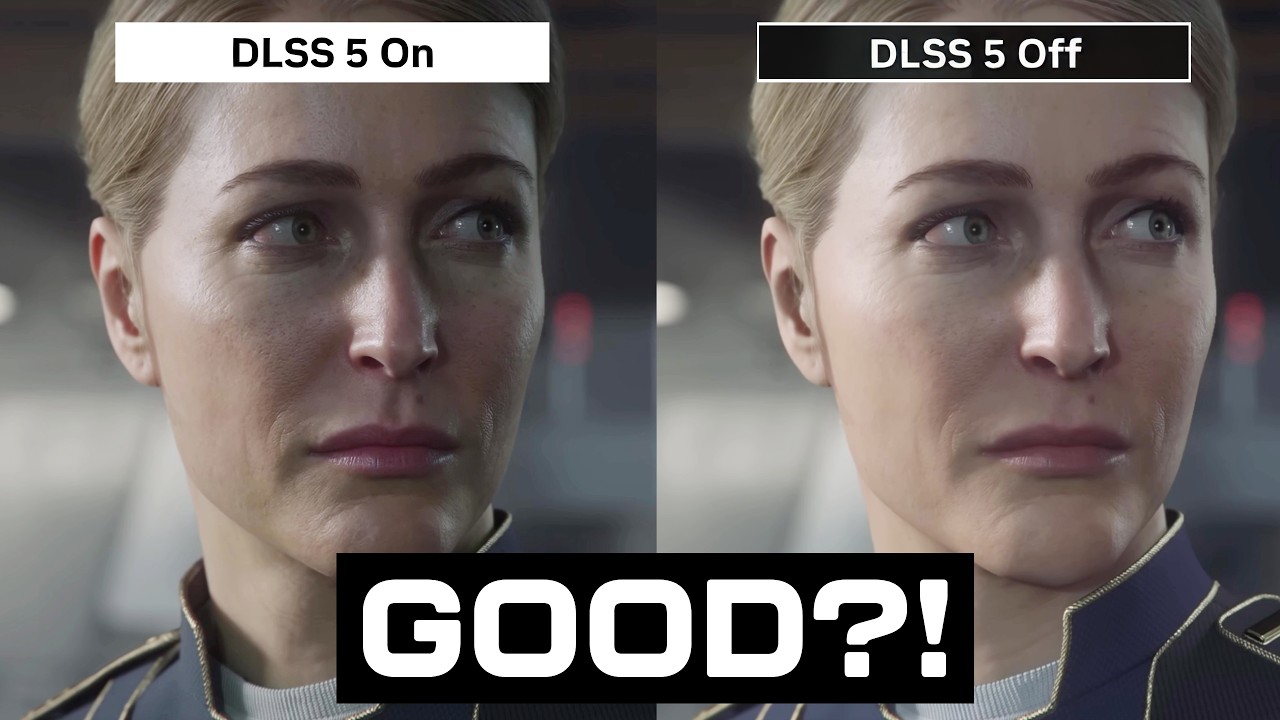
The video is a reaction and exploration of the newly released DLSS 5 technology, particularly its application in Star Citizen and Squadron 42. The host admits initial unfamiliarity with DLSS 5 but acknowledges the buzz around it and decides to test its effects on the games using a utility called Magpie, since direct implementation is hindered by anti-cheat systems. Although performance suffers significantly with DLSS 5 enabled—dropping frame rates from around 100 FPS to about 30—the visual improvements are notable, especially in character lighting and skin detail, which appear more natural and realistic.
In the character creator and various in-game scenes, DLSS 5 enhances lighting, bringing out subtle facial details and improving skin tones. The technology seems to fix overexposure and adds a cinematic quality to the visuals without drastically altering the original models. Some comparisons to AI-generated images and other games like Hogwarts Legacy highlight that DLSS 5 primarily enhances existing detail rather than creating new features, which results in a more grounded and less uncanny appearance. However, some lighting changes can feel a bit off, and certain characters exhibit exaggerated skin pores, which may not be universally appealing.
The video also touches on the representation of different skin tones under DLSS 5, noting that while lighter skin tones appear improved, there is some concern about how darker skin tones are rendered, with lighting sometimes making characters look overly tanned or washed out. Despite this, the overall consensus is that DLSS 5 generally improves the visual fidelity of characters across the board. The host expresses curiosity about how the technology might be refined to better suit different lighting scenarios and skin types, emphasizing the importance of accurate and inclusive visual representation.
Performance-wise, DLSS 5 is currently a heavy burden on hardware, making it impractical for regular gameplay in Star Citizen at this stage. The host speculates that future iterations of graphics cards and further optimization could make DLSS 5 a standard feature, much like ray tracing has become over time. There is also discussion about the potential for official support of DLSS 5 in Star Citizen and Squadron 42, which could allow for better integration and performance improvements. The host encourages viewers to consider the technology’s benefits despite the current performance costs and invites debate on the artistic implications of AI-enhanced graphics.
Finally, the video briefly mentions a leak suggesting Squadron 42 will be available on Steam, which could boost sales and accessibility. The host recommends checking out additional content from 10 pound42, a trusted source on Star Citizen performance and hardware advice. Overall, the reaction to DLSS 5 is cautiously optimistic—while the technology is not yet perfect and comes with performance trade-offs, it undeniably enhances the visual quality of characters and scenes, potentially marking a significant step forward for game graphics in Star Citizen and Squadron 42.