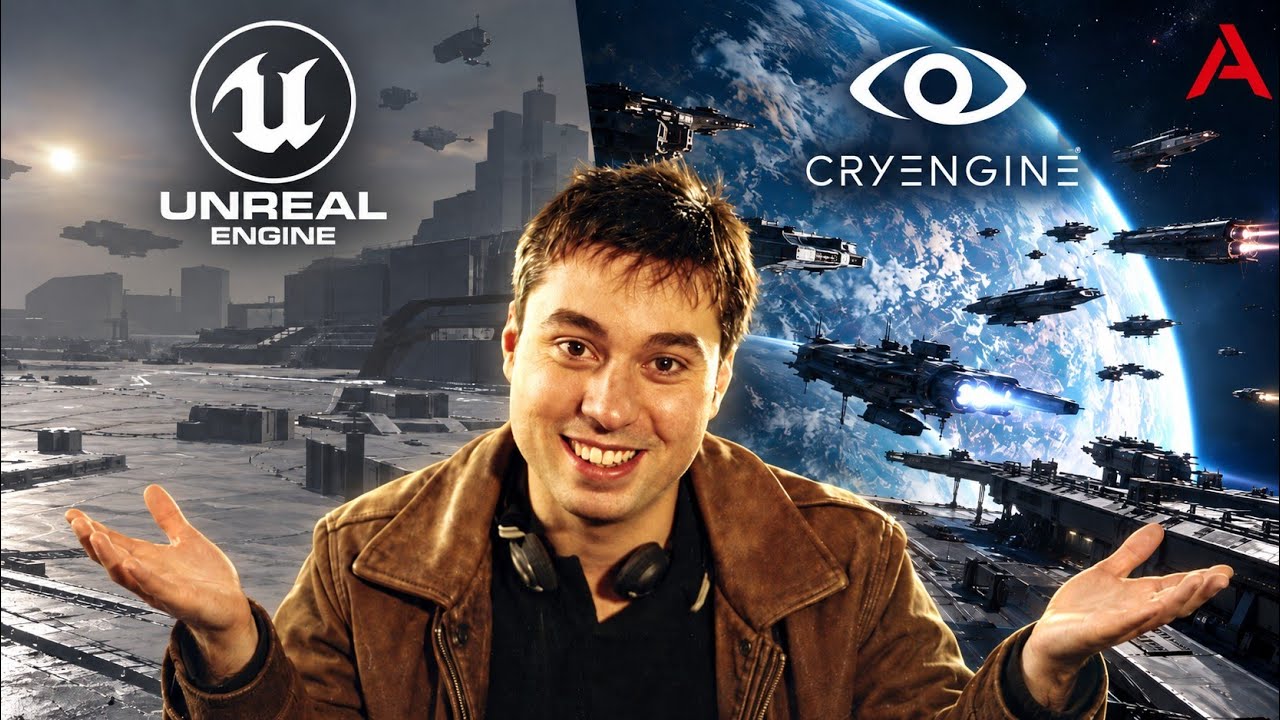
The video explores the rise and fall of CryEngine, the game engine initially used by Star Citizen, highlighting its technological brilliance and eventual decline. CryEngine was revolutionary when it debuted, particularly with the original Far Cry and later Crysis, which set new standards for graphics and open-world environments. The engine was ahead of its time, pushing hardware limits and delivering unprecedented visual fidelity, though this also meant games built on it took longer to develop and required cutting-edge PCs. Despite its technical superiority, CryEngine struggled commercially, as its demanding nature limited its audience and sales.
Crytek, the developer behind CryEngine, enjoyed early success with titles like Far Cry and Crysis but faced financial difficulties as the market shifted towards consoles, which initially struggled to run CryEngine games. Attempts to adapt the engine for consoles with CryEngine 3 and games like Ryse: Son of Rome showcased impressive visuals but failed to translate into sustained financial success. Crytek’s internal struggles intensified with delayed paychecks, studio closures, and management issues, culminating in the sale of CryEngine’s core technology to Amazon.
Amazon acquired the CryEngine technology and used it to create Lumberyard, a free engine derivative that directly competed with Crytek’s original engine. This move further weakened Crytek’s position in the market. In response, Crytek made CryEngine pay-what-you-want to try to regain users but failed to restore trust. Star Citizen, the most ambitious project using CryEngine, eventually switched to Amazon’s Lumberyard, causing a legal battle between Crytek and Cloud Imperium, the developers of Star Citizen, which ended in a confidential settlement.
The video also contrasts CryEngine with other game engines like Unreal Engine, noting that while Unreal is simpler and more accessible, it often results in poorly optimized games due to developers’ reluctance to invest in optimization. CryEngine, on the other hand, offered unmatched graphical potential but at the cost of complexity and development speed. The video suggests that CryEngine’s downfall was partly due to its pioneering technology arriving before the industry and hardware were ready, leading to commercial failures despite critical acclaim.
Ultimately, the video praises Star Citizen’s decision to acquire the rights to CryEngine, allowing them to customize and build upon it extensively. This move gave them control over the engine’s development, enabling them to push technological boundaries despite the engine’s complexity. The story of CryEngine serves as a cautionary tale about innovation, market readiness, and the challenges of balancing technical ambition with commercial viability in game development. The narrator closes by acknowledging the depth and insight provided by the video’s creator, Radical Cap, appreciating the detailed historical perspective on CryEngine’s legacy.